Bowed basement wall signs can be subtle at first: a horizontal crack, a shallow inward curve, a block joint that no longer lines up, or a gap that changes over time. One clue does not identify the cause or repair. The useful next step is to document the wall shape, water conditions, and change before asking a qualified professional to evaluate the property.
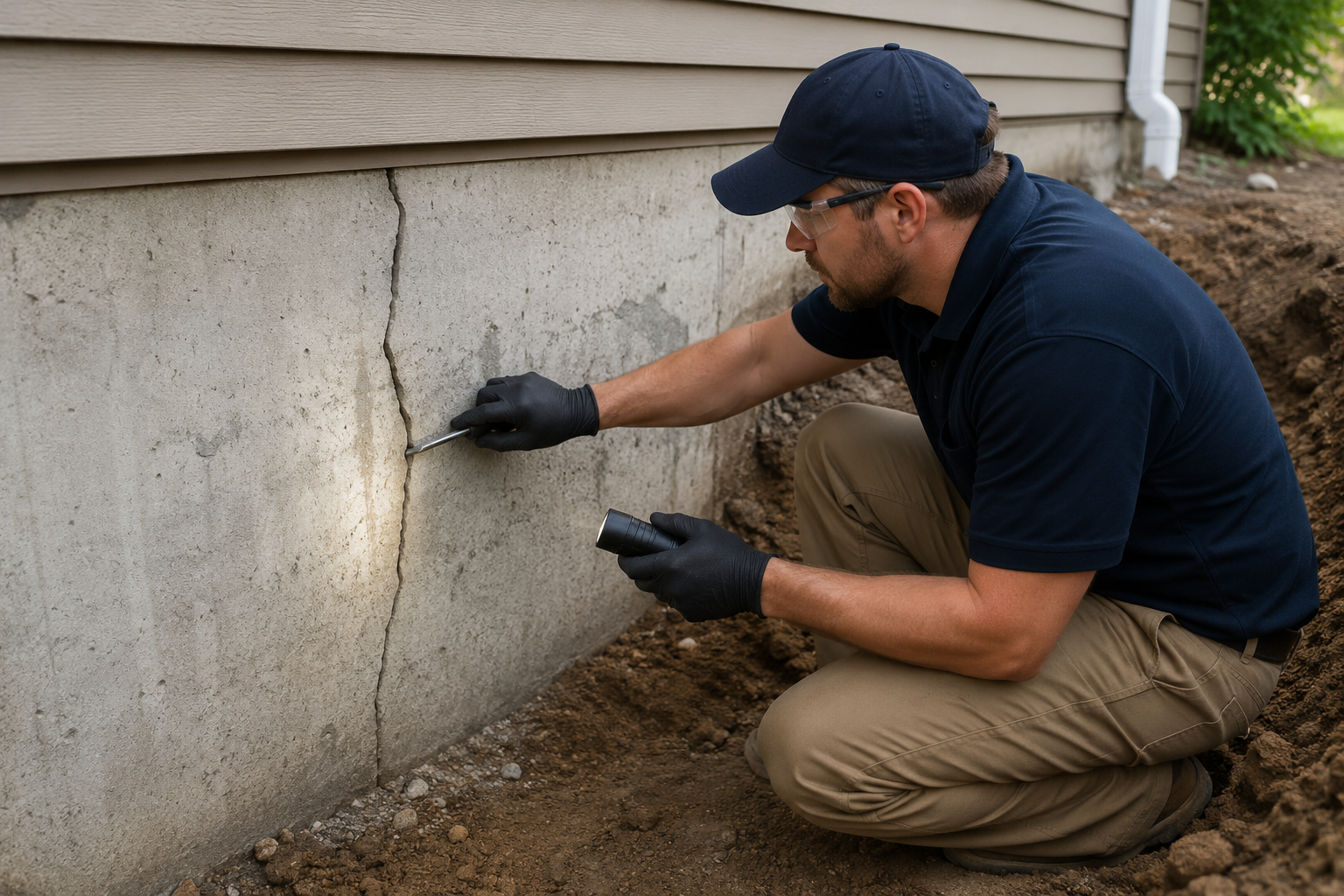
Bowed Basement Wall Signs: Seven Clues Worth Recording
1. A horizontal crack through a wall or mortar joint
A horizontal crack can appear near the middle of a poured-concrete wall or follow a mortar joint in a block wall. Photograph the full length and both ends. Note whether the crack is only a surface line or whether the faces on either side are offset. A horizontal crack is a reason for evaluation, not proof of one specific failure mechanism.
2. An inward curve that is easiest to see from the side
Stand back and look along the wall rather than only at it. Raking light can reveal an inward curve that is hard to see head-on. Do not rely on a phone’s wide-angle image for measurement because lens distortion can exaggerate or hide the shape. Record where the curve begins, reaches its deepest point, and returns toward the original plane.
3. Block courses or mortar joints that step out of plane
In a masonry wall, one course may project farther into the basement than the course above or below it. Stair-step cracking can occur at the same time, but the important observation is displacement. Photograph a straight reference near the wall without pressing or fastening anything to the masonry.
4. Separation at corners, partitions, windows, or the sill area
Movement may show as an opening at an inside corner, a widening joint near a basement window, a partition that no longer meets the foundation evenly, or a changed connection near the top of the wall. These details help show whether the concern is isolated or part of a larger pattern.
5. Doors, windows, or finishes that begin binding near the area
A sticking door or cracked finish has many possible causes and does not diagnose a foundation. It becomes more useful when its timing and location match visible wall movement. Record the first date noticed and whether the condition changes with season, weather, or continued movement.
6. Water staining or efflorescence along a moving crack
Water can use an existing opening without causing the movement, and water pressure outside a wall can be part of a broader condition. Photograph the first wet point during a storm and compare it with the crack pattern. The separate guide to basement efflorescence and moisture clues explains why white mineral deposits show a water pathway but not a complete diagnosis.
7. A measurable change in shape, width, or displacement
Change is one of the most important bowed basement wall signs. Use dated photographs from the same position with the same reference object. Do not drill, anchor, jack, excavate, or load the wall to test it. A qualified evaluator can select appropriate measurement methods and decide whether temporary precautions are needed.
What These Signs Do Not Prove
A single hairline crack, damp mark, stuck door, or uneven block does not prove that a wall is actively bowing. Construction joints, curing shrinkage, finish movement, temperature change, drainage, and earlier repairs can create overlapping clues. The goal of recording bowed basement wall signs is to make the inspection more specific, not to select a repair from a photograph.
The federal HUD Rehabilitation Guide for foundations describes multiple approaches for displaced or inwardly bowed walls, including stabilization and reconstruction scenarios. That range is exactly why the wall material, amount and location of displacement, drainage, access, and connection to the building need property-specific review.
Rochester Water and Freeze-Thaw Context
Rochester-area foundations experience repeated rain, snowmelt, freezing, and thawing. Those conditions can change soil moisture and expose drainage defects, but the town name or season still cannot diagnose a wall. Trace gutters, downspouts, grade, paved surfaces, window wells, standing water, and the sump discharge route. Compare those exterior observations with the wall’s first wet point and shape.
Use the Rochester basement-water homeowner guide to record location, timing, and site conditions. If water entry is the primary concern without visible movement, start with the basement waterproofing guide. If crack direction, width, or leakage is the main clue, review foundation crack repair questions.
What to Bring to a Foundation-Wall Evaluation
- Dated wide and close photographs of each bowed basement wall sign
- The wall material and approximate location in the house
- Where the wall is below grade and where exterior access is limited
- Crack direction, visible offset, moisture, and repair history
- Rain, snowmelt, sump, drainage, and grading observations
- Any recent change in wall shape, openings, or nearby finishes
Scope, Permits, and Safety
Wall repair scope may involve drainage correction, crack work, stabilization, straightening, partial rebuilding, exterior excavation, or a combination. Ask each proposer to identify which bowed basement wall signs the work addresses, the intended outcome, access requirements, permit responsibility, and what is excluded. The basement repair cost factors guide provides an apples-to-apples scope checklist.
The City of Rochester permit office lists structural repairs among work that typically requires a building permit and notes that requirements vary by project. Properties outside the city must be checked with the authority having jurisdiction for that address.
Keep people away from the area and seek prompt qualified help if movement appears sudden, masonry is falling, utilities are affected, a support connection is failing, or the wall appears unstable. Do not excavate beside, brace, jack, drill into, or remove part of a questionable wall as a homeowner test.
Request a Rochester foundation-contractor match.
Service disclosure: Rochester Basement Repair is an information and contractor-referral service, not a structural engineer or general contractor. It does not inspect properties, diagnose walls, perform repairs, or guarantee a match. Contractors are independent businesses; verify qualifications, insurance, permits, scope, and contract terms.