Basement waterproofing in Rochester, NY starts with identifying how water enters the home. Water can move through wall cracks, porous masonry, the floor-wall joint, windows, plumbing penetrations, or drainage problems outside. The right plan addresses the source instead of relying on a one-size-fits-all product.
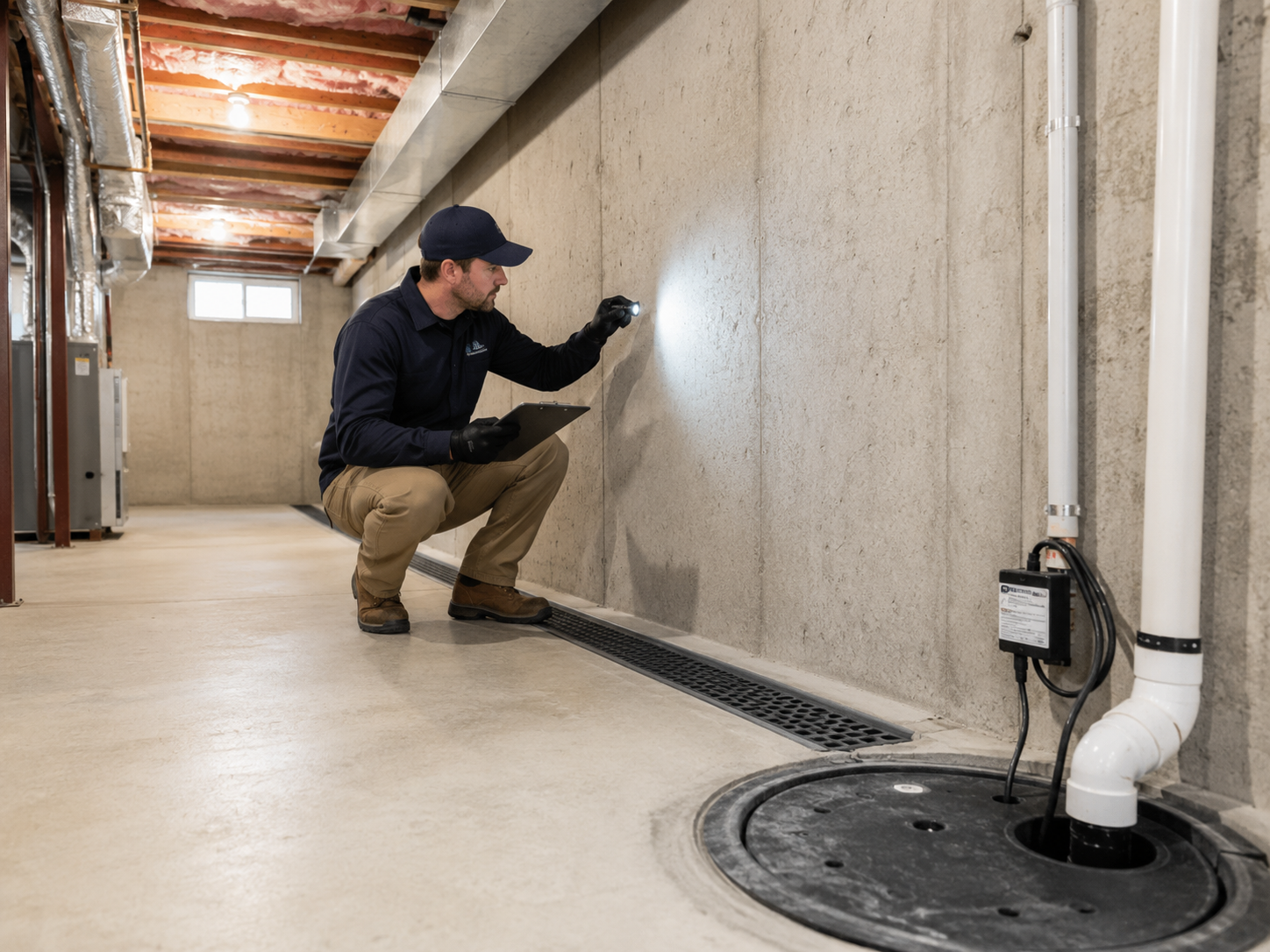
Basement Waterproofing in Rochester, NY: Start With the Water Pattern
- Water after heavy rain: review gutters, downspouts, grading, window wells, and exterior drainage.
- Water at the floor-wall joint: groundwater and hydrostatic pressure may be involved.
- A single leaking crack: document the crack and whether exterior water collects nearby.
- Condensation or broad dampness: indoor humidity, ventilation, and cold surfaces may contribute.
- Water near a window: inspect the well, cover, drain, grading, and seal around the opening.
Common Waterproofing Components
Exterior water management
Clean gutters, properly extended downspouts, functional window wells, and grading that carries water away from the home can reduce the amount of water reaching the foundation. More extensive exterior drainage or membrane work may be appropriate in some situations.
Interior drainage
An interior drainage system collects water near the perimeter and directs it toward a sump basin. Details such as drainage path, wall treatment, cleanouts, pump capacity, discharge location, and backup power affect the system’s performance.
Crack and opening repair
Leaks through specific cracks or penetrations may be treated with injection, sealing, or related repairs. The crack’s condition and any exterior drainage issue should be considered before choosing an approach.
Moisture control
Dehumidification and air sealing can help manage humidity, but they do not replace drainage or structural repairs when liquid water is entering the basement.
Match the Leak to a Written Repair Scope
Quotes for basement waterproofing in Rochester, NY should connect the observed water entry to specific work. These examples help you compare proposals; they are not a diagnosis of your home.
- One leaking crack: Ask the contractor to identify the wall material, crack locations and any movement before recommending injection or another repair. The proposal should state preparation, repair material and extent, and whether drainage or structural evaluation is separate.
- Recurring floor-wall seepage: If perimeter drainage is proposed, request the included length and route, sump connection and discharge plan. Check whether floor removal, concrete replacement, pump equipment, electrical work and finish restoration are included or separately priced.
- Water requiring exterior work: If excavation is recommended, ask for its length and depth, wall preparation, membrane and drainage details, and backfill plan. Decks, paving, utilities and limited access may affect the work; specify who restores disturbed areas.
Compare equivalent scopes before judging the total. A focused crack repair and a perimeter drainage installation address different conditions and should not be treated as interchangeable quotes.
For a broader comparison, see our basement repair cost factors and interior versus exterior waterproofing guide.
Questions for a Waterproofing Contractor
- Where is the water entering, and what evidence supports that conclusion?
- Which exterior conditions should be corrected first?
- How will collected water reach the sump and discharge safely?
- What happens during a power outage or pump failure?
- What finishes must be removed and restored?
- What maintenance and warranty conditions apply?
Finding Basement Waterproofing Help in Rochester
Rochester Basement Repair is preparing a matching service for homeowners in Rochester and nearby Monroe County communities. When intake becomes available, project information may be shared with an independent local contractor that handles the relevant type of basement water problem.
Service disclosure: Rochester Basement Repair is an educational and contractor-referral website, not a general contractor. It does not perform inspections or repairs and does not control contractor pricing, scheduling, contracts, warranties, or workmanship. Homeowners should independently verify contractor qualifications, insurance, references, proposed scope, and agreement terms.
Frequently Asked Questions
Will paint or sealant stop basement water?
A coating may help with limited surface moisture, but it may fail when cracks, drainage, or water pressure are the underlying cause. The source of water should be identified first.
Do I need an interior or exterior system?
That depends on the entry point, foundation, access, exterior conditions, finished space, budget, and repair goals. Ask a contractor to explain why the proposed approach fits the observed water pattern.
Can waterproofing prevent mold?
Controlling water and humidity reduces conditions that support mold growth, but existing mold or contaminated materials may require separate assessment and remediation.
Planning a Durable Waterproofing Project
Before choosing a system, document when the water appears, where it starts, and whether it follows rain, snowmelt, plumbing use, or a power outage. A useful proposal should connect those observations to a specific repair approach and explain maintenance, discharge routing, backup power, and warranty terms. For basement waterproofing in Rochester, NY, seasonal groundwater, freeze-thaw cycles, grading, gutters, and older foundation materials can all affect the recommendation. Comparing the diagnosis and scope—not only the price—helps homeowners identify a practical, durable solution.
Basement waterproofing in Rochester, NY works best when the contractor documents the water source and explains why the proposed system fits it. When comparing basement waterproofing in Rochester, NY proposals, review drainage paths, pump capacity, discharge routing, maintenance, exclusions, and warranty responsibility. A well-scoped basement waterproofing in Rochester, NY plan should address both the visible symptom and the conditions that allow it to return.
For general moisture and indoor-air guidance, the U.S. Environmental Protection Agency’s mold resources explain why controlling moisture is the key to limiting mold growth. This reference is educational; a contractor should still diagnose the conditions at the property.
Related guides: foundation cracks, sump pumps, and the future matching process.