Brighton basement waterproofing decisions start with the route water takes across the property. Heavy rain, snowmelt, short downspouts, settled soil, and a blocked surface-drainage path can all produce a wet basement, but they do not call for the same repair.
What Brighton Homeowners Should Observe First
Brighton is crossed by developed drainage routes associated with Allen Creek, Buckland Creek, and Red Creek. That geography is context, not a diagnosis for an individual house. After rain, follow the nearest swale, culvert, storm drain, and visible drainage easement. If neighboring yards remain wet along the same route, a broader surface-flow pattern may deserve attention. If only one basement wall becomes wet directly below a downspout, start with that focused exterior path.
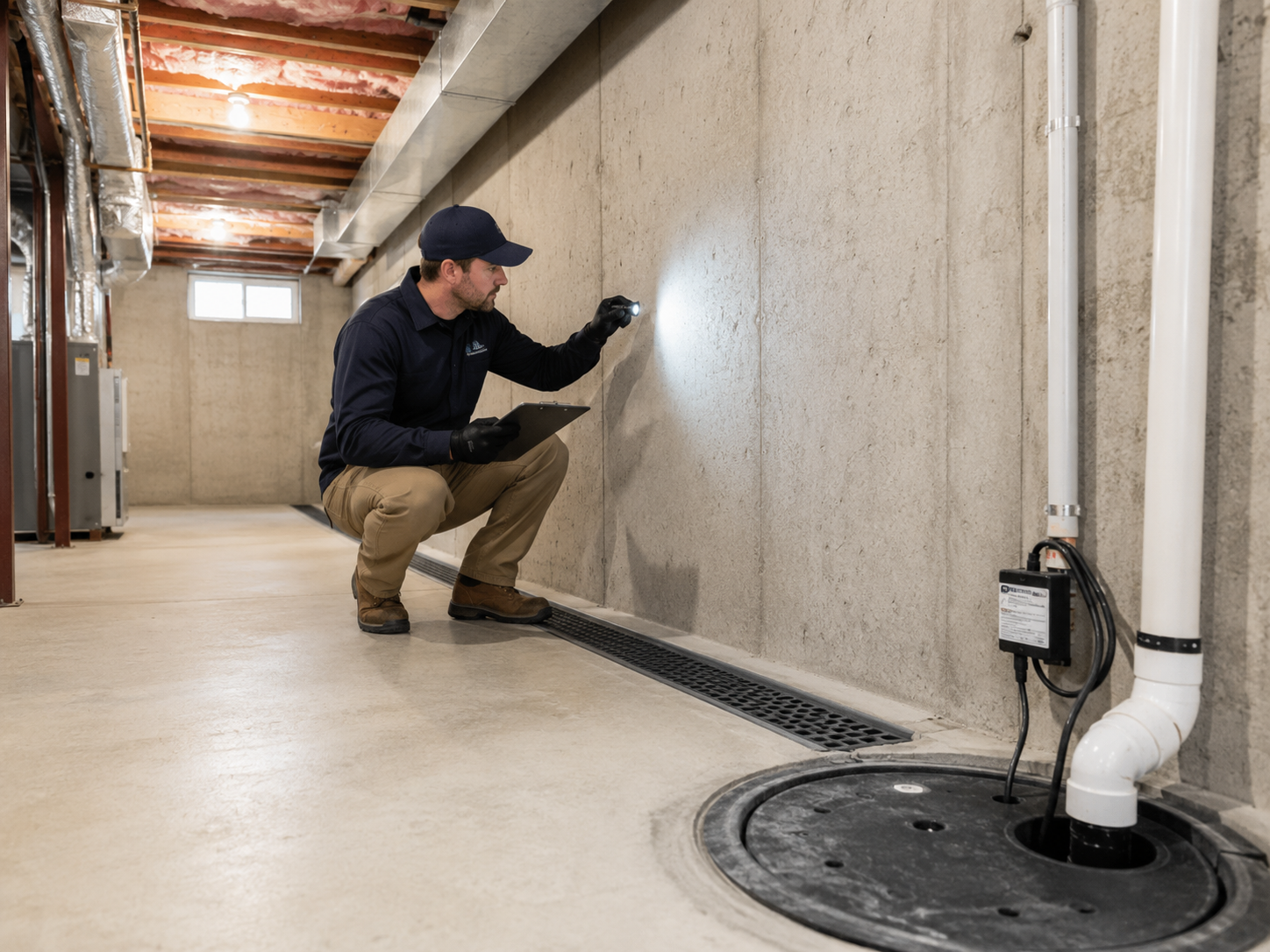
Record the first wet point inside and the timing. Water that appears quickly around a window well or wall penetration can suggest a different investigation from seepage that develops at the floor-wall joint after several wet days. Photograph the area during the event, not only after it dries, and note how often the sump pump runs.
Exterior Checks Before Choosing a System
- Confirm that gutters are clear and downspouts carry roof water away from the foundation.
- Look for soil, walks, patios, or driveways that direct water toward the house.
- Check window-well covers, drains, and the grade around each well.
- Trace the sump discharge to a working outlet that does not return water to the same wall.
- Do not fill, block, or reroute a drainage easement without confirming what it serves.
The Town of Brighton Public Works page identifies storm-drainage design and construction among the department’s responsibilities. Municipal infrastructure and private foundation drainage are different systems, so determine which side of the property line a suspected issue belongs to before authorizing work.
Repair Options Should Match the Evidence
A contractor may discuss grading or discharge corrections, crack injection, an interior drainage channel, a sump-pump replacement, exterior excavation, or structural evaluation. These approaches solve different problems. Ask the evaluator to identify the likely source, show how the proposal controls that source, and explain what is excluded.
Use the main Rochester basement waterproofing guide to compare interior and exterior approaches. If the concern is a leaking or changing crack, review the foundation crack repair guide. Frequent pump cycling, loss of power protection, or a questionable discharge route belongs in a sump-pump evaluation.
When a Foundation Concern Needs Broader Review
A wet vertical crack is not automatically structural, and a dry crack is not automatically harmless. Note direction, width, displacement, and change over time. Bowing, horizontal cracking, stair-step cracking, sticking openings, or visible movement deserves a foundation-focused evaluation rather than a water-only proposal.
Questions to Ask Before Approving Work
A useful written proposal should connect the observed water path to each part of the scope. Ask what evidence supports the diagnosis, whether the work controls water outside, collects it inside, or does both, and how performance will be checked after a comparable weather event. Also confirm the discharge endpoint, winter protection, electrical responsibility, access, cleanup, and finished-surface restoration.
- Which conditions are covered by the warranty, and which are excluded?
- Who is responsible for permits, utility marking, and concealed conditions?
- What routine pump, drain, or outlet maintenance will the homeowner need to perform?
Request Brighton Basement Repair Help
When requesting a contractor match, include the street’s general area or ZIP code, the first wet point, recent weather, foundation type, pump behavior, and any photos. That information helps distinguish an urgent pump or structural issue from a project that can be evaluated under normal scheduling.
Request a Brighton basement or foundation contractor match.
Service disclosure: Rochester Basement Repair is an information and contractor-referral service, not a general contractor. It does not inspect properties, perform repairs, employ contractors, or control prices, schedules, warranties, or workmanship. A match is not guaranteed.