Sump pump installation Rochester homeowners can plan starts with understanding how water reaches the pit and where it will be discharged. A reliable system depends on more than the pump itself: pit design, drainage, capacity, discharge location, check valves, backup power, alarms, and maintenance all matter.
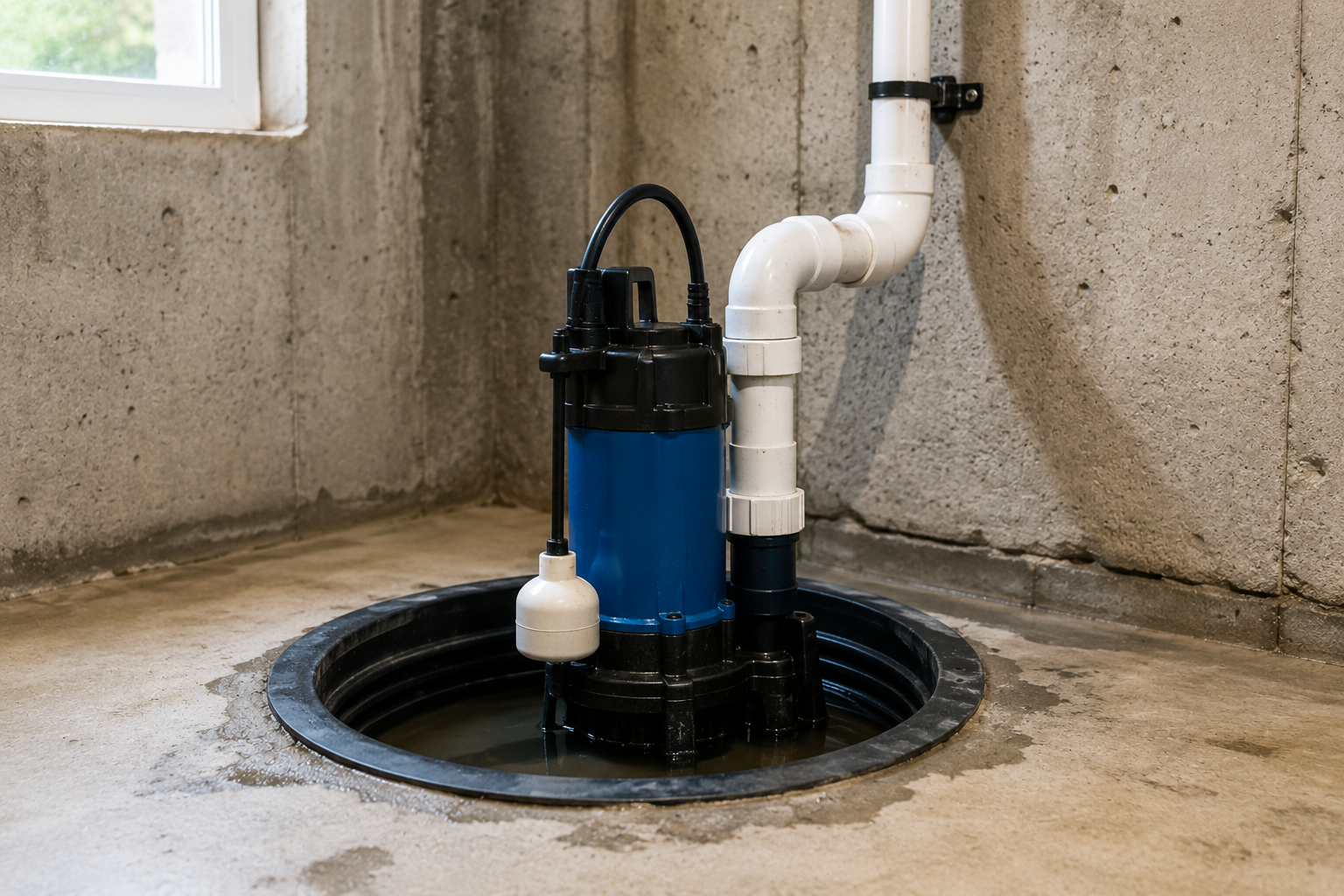
Signs a Sump System Needs Attention
- The pump does not start when the water rises
- It runs constantly or cycles rapidly
- The motor is unusually loud, hot, or vibrating
- Water returns to the pit after the pump stops
- The discharge line is frozen, blocked, leaking, or too close to the house
- The pit overflows during storms or snowmelt
- There is no backup plan for a power outage or pump failure
Sump Pump Installation Rochester Planning Checklist
Water volume and pump capacity
The pump must move the expected water volume while lifting it to the discharge point. Capacity depends on both flow rate and total head, so a larger advertised number does not automatically mean a better fit.
Primary and backup systems
A battery backup or water-powered backup may provide protection if the primary pump fails or power is lost. Ask how long the backup can operate, how it is tested, and what maintenance or replacement schedule applies. For a repeatable outage checklist, review the sump pump backup plan.
Discharge location
Discharged water should move away from the foundation without creating a slip hazard, erosion, icing, or a return path to the basement. Local requirements and site conditions may affect the routing.
Alarms and maintenance
High-water alarms can provide early warning. The pit, float, check valve, battery, intake, and discharge should be inspected and tested on a regular schedule recommended by the manufacturer and installer.
Questions for a Sump Pump Contractor
- How was the required capacity calculated?
- Is the pit and drainage layout adequate?
- What happens if the primary pump or power fails?
- Where will the water discharge, and how is freezing addressed?
- Are an alarm, sealed lid, check valve, and backup included?
- What testing, maintenance, and warranty terms apply?
7 Practical Installation Tips
Before choosing equipment, document where water appears, how quickly the pit fills, and whether outages happen during major storms. Ask the installer to explain the pump curve, total head, check valve, sealed lid, alarm, and backup capacity in plain language. Use the Rochester pre-storm sump pump checklist to review the system before severe weather.
Confirm that the discharge route moves water well away from the foundation and does not create icing, erosion, or a path back toward the home.
Keep the outlet accessible for inspection and protect exposed piping from freezing. Test the primary pump and backup under realistic conditions, record model and warranty information, and place a recurring maintenance reminder on your calendar. Review Ready.gov flood preparedness guidance as part of a broader home safety plan. A careful sump pump installation Rochester plan should address drainage, power loss, monitoring, service access, and long-term maintenance—not just pump horsepower.
Finding Sump Pump Installation Rochester Help
For sump pump installation Rochester homeowners can research, Rochester Basement Repair is preparing a matching service for homeowners in Rochester and nearby Monroe County communities. When intake becomes available, project details may be shared with an independent local contractor that installs or replaces sump systems.
Service disclosure: Rochester Basement Repair is an educational and contractor-referral website, not a general contractor. It does not install equipment or control contractor pricing, scheduling, contracts, warranties, or workmanship. Homeowners should verify contractor qualifications, insurance, references, equipment specifications, proposed scope, and agreement terms.
Frequently Asked Questions
How often should I test a sump pump?
Follow the manufacturer’s instructions and test regularly, especially before wet seasons or travel. Confirm that the float moves freely, the pump starts, and water discharges away from the home.
Does a battery backup replace the main pump?
No. For any sump pump installation Rochester plan, a backup is designed to provide limited protection when the primary system or power source fails. Capacity and run time vary, so understand the system’s limits.
Why does my pump run so often?
Frequent operation may reflect high groundwater, drainage conditions, a stuck float, a failed check valve, an undersized pit or pump, or water discharging too close to the foundation. A contractor can assess the complete system.
Related guides: basement waterproofing, foundation cracks, and the future matching process.