This Rochester sump pump storm checklist helps homeowners inspect the visible parts of a sump system before heavy rain, snowmelt, or a power interruption. It is a preparation guide, not a substitute for diagnosis, electrical work, plumbing work, or an on-site evaluation.
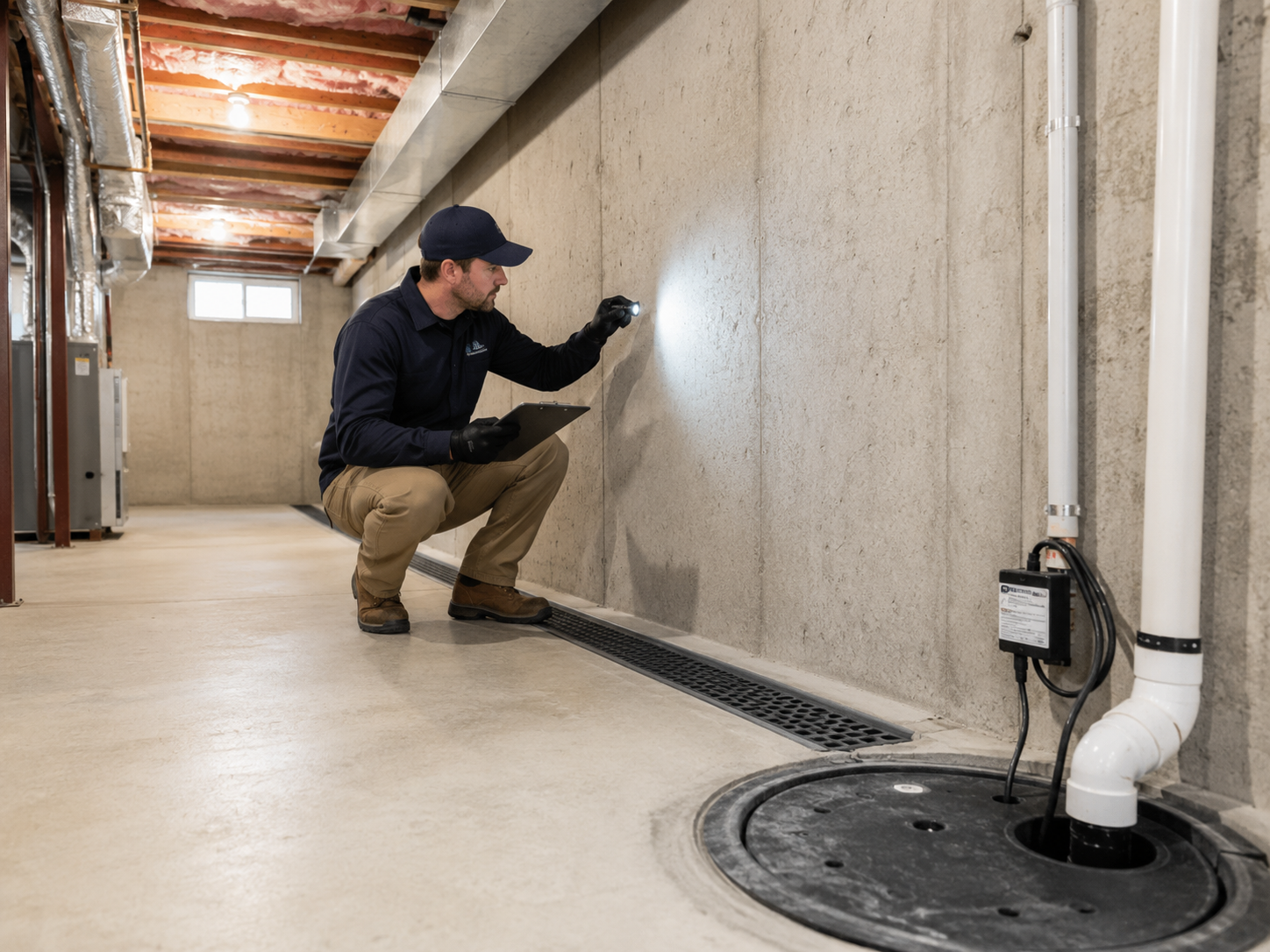
Rochester Sump Pump Storm Checklist: Before the Weather Arrives
1. Confirm that the pit and pump are accessible
Remove stored items that block the cover, alarm, outlet, or discharge connection. A finished enclosure should allow the cover to be removed and the pump to be serviced without dismantling cabinets or flooring. Do not place loose materials where they can fall into the pit or interfere with the float.
2. Inspect the power source from a dry location
Look for a dedicated, secure connection and visible damage to the cord or receptacle. Do not use an improvised extension cord. Never handle electrical equipment while standing in water or when the outlet, cord, or pump appears wet or damaged. A qualified electrician or pump technician should address unsafe electrical conditions.
3. Test the float and primary pump safely
When the area and electrical connection are dry and safe, slowly add clean water to the pit and observe whether the float moves freely, the pump starts, and the water level falls. Listen for grinding, repeated rapid starts, or a motor that runs without lowering the water. Stop and seek service if the test reveals an unsafe or abnormal condition.
4. Follow the discharge route to its visible endpoint
Check accessible pipe and fittings for leaks, loose joints, sagging, ice, or blockage. Confirm that discharged water reaches a lawful, functioning location away from the foundation and does not immediately flow back toward the house or a neighboring property. Do not disconnect or redirect buried piping without understanding where it terminates.
5. Listen for check-valve backflow
After the pump stops, a failed or incorrectly installed check valve can allow water in the discharge pipe to return to the pit. A small sound at shutoff is not a complete diagnosis, but a large returning volume or rapid restart is useful information to record for a contractor. Frequent short cycling can shorten equipment life and may also indicate a float, capacity, or inflow problem.
6. Test the alarm and identify its notification path
A local high-water alarm only helps when someone can hear it. If the system has a remote notification feature, confirm that its app, network connection, battery, and contact settings still work. Keep the alarm sensor positioned according to its instructions and do not silence a warning without finding the cause.
7. Verify the backup system and its limits
A battery backup, water-powered backup, or generator connection has its own capacity, maintenance, and installation requirements. Check the manufacturer’s status indicators and test procedure. Ask how long the backup can operate at the expected pumping rate, what happens during an extended outage, and whether the backup uses the same discharge route as the primary pump.
8. Reduce avoidable water near the foundation
Clear accessible gutters, confirm that downspouts are connected, and look for settled soil, low window wells, or hard surfaces that direct runoff toward the house. A sump pump removes water that reaches the pit; it does not repair every crack, grading defect, roof-drainage problem, or plumbing leak. Review the Rochester basement waterproofing guide when the symptom extends beyond the pump system.
9. Record a baseline before the storm
Photograph the pit, pump label, alarm, backup status, pipe connections, and discharge endpoint. Note the test date, approximate cycle time, weather conditions, and any recent service. During the next event, record when the pump begins running, how often it cycles, and where water first becomes visible. Comparable observations are more useful than a general statement that the pump ran constantly.
What a Sump Pump Does—and Does Not Do
A sump pump removes water collected in a pit. It does not automatically seal a leaking wall crack, correct poor grading, rebuild a failed drain, prevent sewer backup, or stabilize a moving foundation wall. Water that still appears after pump work may reflect a blocked discharge, undersized equipment, a drainage connection problem, a separate entry point, or an event beyond the system’s capacity.
Use the Rochester sump-pump planning guide for capacity, backup, alarm, cover, and installation questions. Keep this Rochester sump pump storm checklist with the pump model, warranty, service contact, and maintenance record so later observations can be compared to the same baseline.
When the Situation Is Urgent
Leave the area and seek appropriate emergency or professional help when standing water may contact electrical equipment, sewage may be present, water is rising rapidly, or structural movement appears sudden. Ready.gov flood guidance warns against walking, swimming, or driving through floodwater and provides broader household preparation information.
A pump that will not start, a frozen or blocked discharge, repeated breaker trips, a failed backup, or water rising above the pit calls for prompt attention. Do not remove a cover, reach into the pit, or service electrical components when conditions are unsafe.
Information to Include in a Contractor-Match Request
Provide the property ZIP code, first wet point, event timing, primary-pump behavior, backup status, alarm result, and visible discharge location. Include photographs and identify any widening crack, wall movement, plumbing backup, or finished-area damage. These details help distinguish a pump-service request from a broader waterproofing, drainage, plumbing, or structural concern.
Request a Rochester basement or sump-pump contractor match.
Service disclosure: Rochester Basement Repair is an information and contractor-referral service, not a general contractor. It does not inspect properties, perform repairs, employ contractors, or control prices, schedules, warranties, or workmanship. A match is not guaranteed.