Pittsford basement waterproofing evaluations should account for rolling terrain as well as canal and creek corridors. The useful question is how water reaches this foundation, not whether a named waterway exists somewhere nearby.
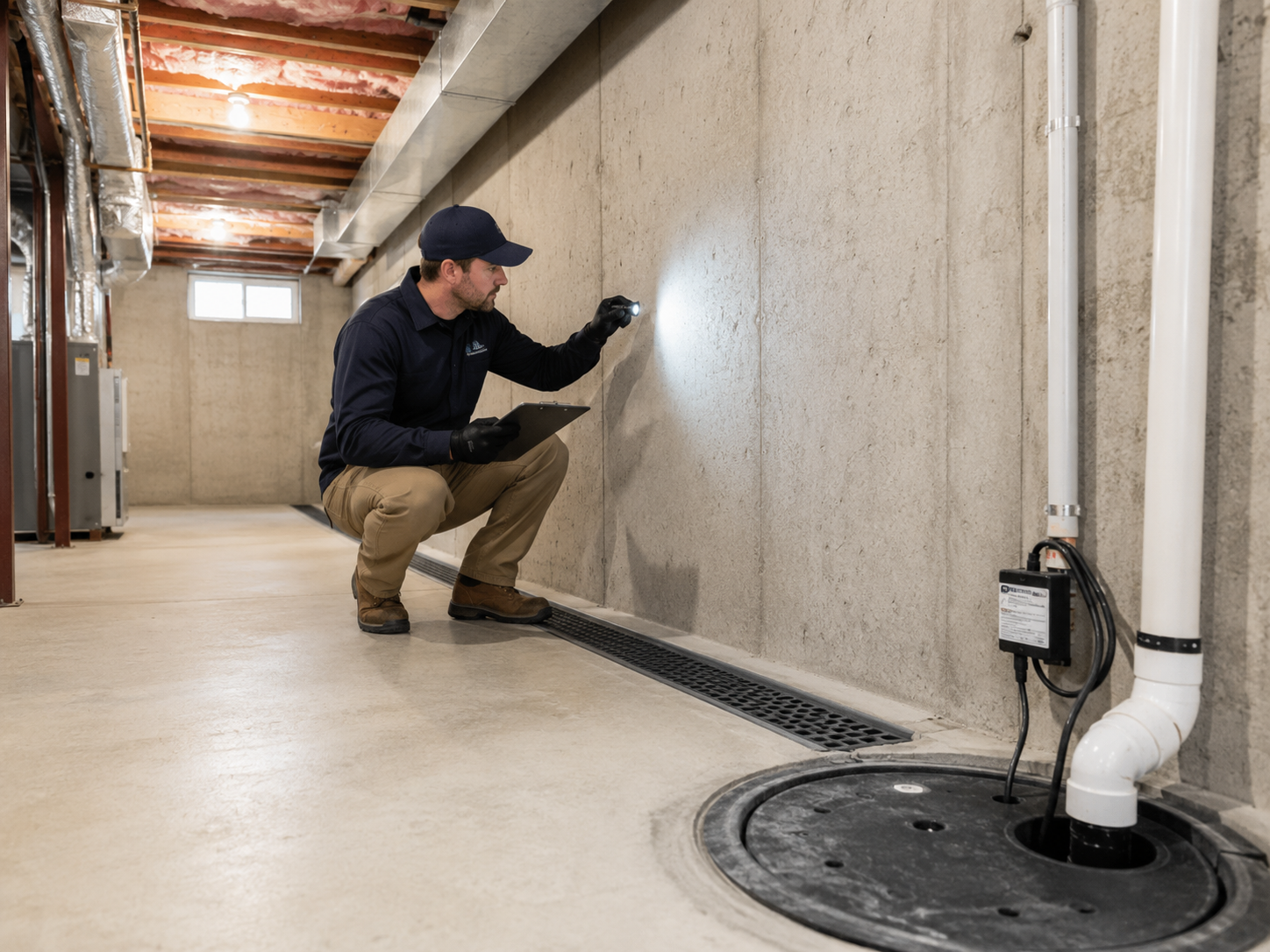
On a Sloped Lot, Start With the Uphill Wall
Identify the uphill side and look for water concentrated by a driveway, patio, retaining edge, roof valley, or grade change. A short downspout at the top of a slope can release substantial water toward one wall. On a lower property, prolonged sump activity and delayed floor-wall seepage after several wet days may point to a broader saturation pattern that needs different questions.
Document the sequence: when rain began, when the pump started, where moisture first appeared, and how long the area stayed wet. Compare more than one event when possible. One intense summer storm may behave differently from spring thaw over already wet soil.
Inspect Water Collection and Release Points
- Clean gutters and watch for overflow at valleys and inside corners.
- Trace downspouts and buried leaders to a visible, working outlet.
- Look for pavement or landscaping that interrupts the intended swale.
- Check whether window wells are lower than the surrounding grade.
- Confirm that the sump discharge does not return to the uphill wall.
The Town of Pittsford stormwater page explains that local stormwater moves through gutters, drains, pipes, ditches, and outfalls toward waterways. That system context reinforces the need to understand the full path outside a house before deciding how to manage water inside it.
Basement and Foundation Services to Compare
Depending on the evidence, a proposal may cover drainage corrections, an interior perimeter channel, a sump crock or replacement pump, battery or water-powered backup, crack sealing, exterior waterproofing, or structural stabilization. Ask whether the proposal prevents concentration, collects water, seals an opening, supports a wall, or combines several functions.
Use the basement waterproofing guide to compare collection and exterior measures. The sump-pump guide covers capacity, check valves, backup, alarms, and outlet planning. For horizontal, stair-step, displaced, or changing cracks, start with the foundation repair guide.
How to Compare Written Estimates
- Compare the stated diagnosis and evidence, not only the system name.
- Confirm linear footage, pump model or capacity, outlet, restoration, and cleanup.
- Ask who performs the work and who is responsible for the warranty.
- Separate required work from optional moisture-control or finish upgrades.
- Ask how success will be checked during the next comparable weather event.
Document the Completed Water Route
Before work is concealed, ask for a simple record of the installed route: where water is collected, which pump and check valve were used, how power and backup are arranged, and where the line terminates. Keep photographs of open work areas, product information, permits when applicable, and the final written warranty with the property records.
After completion, compare the same first wet point and pump behavior during the next similar event. If the plan also included grading or downspout work, observe those exterior paths at the same time. This gives both homeowner and contractor clearer evidence than a general statement that the basement feels drier.
Retain pump model numbers, alarm instructions, service contacts, maintenance dates, the written warranty, and photographs of the completed installation with the property records.
Request Pittsford Basement Repair Help
Include the ZIP code, uphill side, first wet point, event timing, pump behavior, discharge location, and any crack movement. The clearer the observations, the easier it is to seek a provider who handles the relevant service rather than a generic estimate.
Request a Pittsford basement or foundation contractor match.
Service disclosure: Rochester Basement Repair is an information and contractor-referral service, not a general contractor. It does not inspect properties, perform repairs, employ contractors, or control prices, schedules, warranties, or workmanship. A match is not guaranteed.