Interior-exterior basement waterproofing should be compared only after identifying where the water is coming from. Basement water problems rarely have just one cause. Water may enter after heavy rain because surface runoff is collecting beside the foundation. It may be groundwater pressing through a wall, a foundation crack, the joint where the floor meets the wall, or a drainage system that is clogged, undersized, or failing. The right waterproofing approach starts by finding the water’s path.
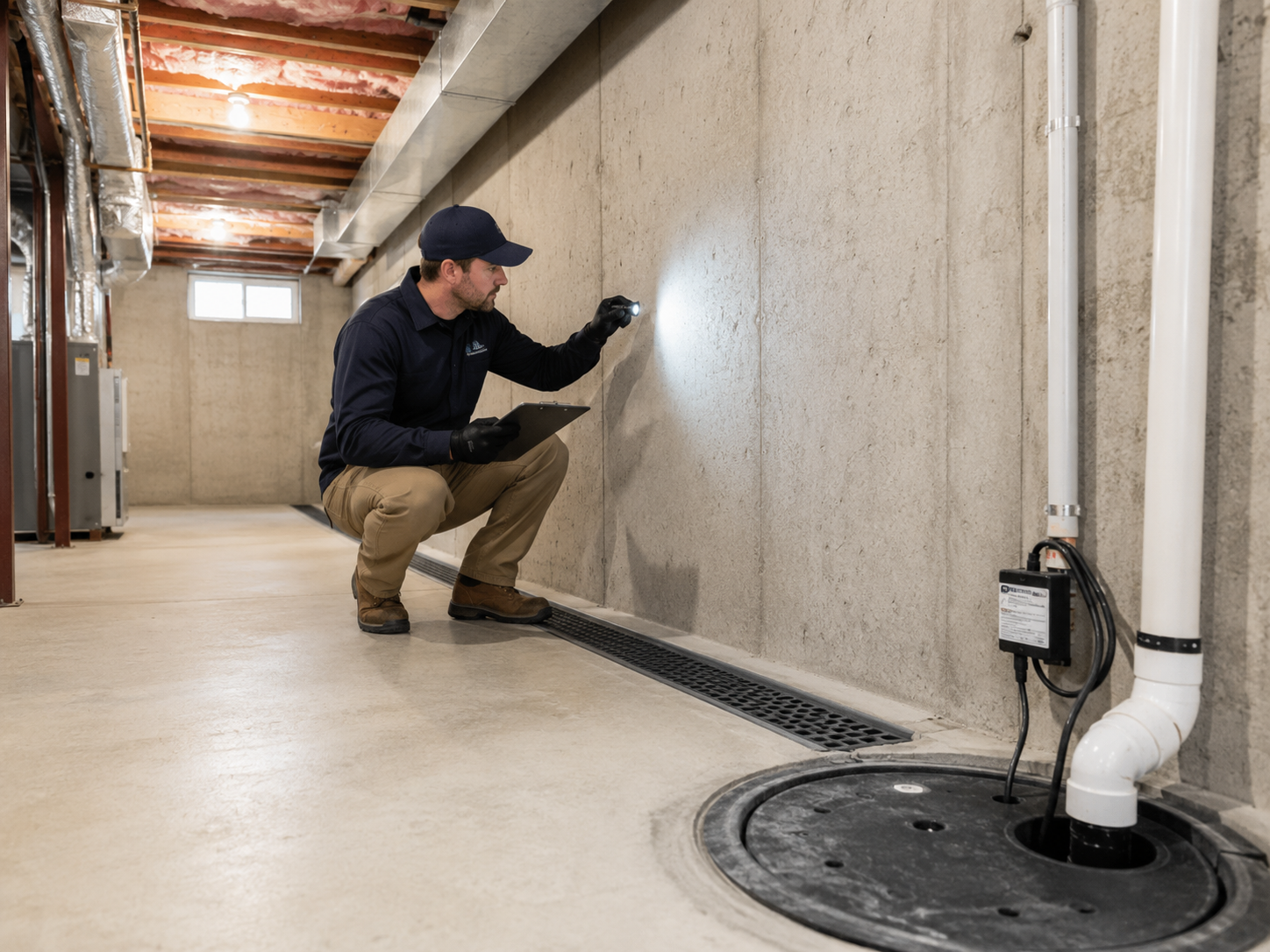
For Rochester, NY homeowners, that means looking at the whole system around the home—not simply choosing the easiest service to sell. Interior drainage, exterior membranes, crack repair, and grading improvements can all be useful, but they solve different problems.
Interior vs Exterior Basement Waterproofing at a Glance
There is no universal “best” system. A method that works well for water coming through a floor-wall joint may not solve a leak caused by a damaged wall crack or a downspout discharging next to the house.
Interior drainage and sump-pump systems
An interior drainage system collects water that reaches the foundation and moves it to a sump pump or another approved discharge point. Depending on the home, the system may use a channel at the floor perimeter, a drainage mat, or a combination of components.
This approach can be practical when exterior excavation is difficult because of decks, patios, additions, landscaping, utilities, or property lines. It manages water on the inside of the foundation, so the source still needs to be understood. A reliable sump pump, backup power plan, and clear discharge route are important parts of the system.
See our sump pump installation information for an overview of what homeowners should ask about pump capacity, discharge, and backup protection.
Exterior waterproofing membranes
Exterior waterproofing addresses the foundation from the soil side. A typical project may involve excavating to the footing, cleaning and repairing the wall, applying a waterproofing membrane, improving drainage, and backfilling in a way that limits future water buildup.
Because the work can reach the source before water enters the building, exterior waterproofing may be a good fit when soil-side pressure or a failed exterior barrier is the main issue. It is also more disruptive and site conditions matter. A contractor should explain how excavation, access, drainage, and backfill will be handled before work begins.
Our Basement Waterproofing Rochester NY page provides more background on common waterproofing approaches.
Foundation crack injection and repair
A crack can be a direct path for water, but sealing the visible opening is not the same as diagnosing why it formed. The repair method depends on the wall material, the crack’s direction and width, whether it is moving, and whether water pressure is present.
Injection materials can seal some cracks, while other situations call for masonry repair, exterior work, or structural evaluation. A repair that only covers the inside surface may fail if the crack continues to move or if water pressure remains outside the wall.
Learn about common warning signs on our Foundation Crack Repair Rochester NY page.
Grading and downspout improvements
Sometimes the most important waterproofing work happens several feet away from the basement. Gutters should be clear, downspouts should discharge away from the foundation, and the ground next to the home should not form a low spot that holds water. Settled sidewalks, patios, and window wells can also direct water toward the wall.
These changes may not be enough when groundwater pressure or a foundation defect is involved, but they can reduce the amount of water reaching the foundation. They are also useful first steps while the leak is being investigated.
What the research can—and cannot—tell a Rochester homeowner
Kavitha and colleagues describe several waterproofing systems used in concrete structures, including membranes, coatings, injection methods, water stops, and drainage systems. Their overview emphasizes that materials and application methods should be selected for the location and extent of water intrusion and for how accessible the area is.
That is a practical framework for a homeowner, but it is not a study of every Rochester house. The paper does not prove that one method will solve a particular local leak. Instead, it supports a common-sense approach: identify the source and location of the water, then match the repair or drainage method to that condition.
Rochester conditions that can change the diagnosis
Rochester homes can experience heavy rain, spring snowmelt, and freeze-thaw cycles. Those conditions can expose weak spots in drainage, open or widen cracks, and leave soil saturated around a foundation. Soil and drainage conditions also vary from one property to the next, so a solution that worked for a nearby house may not be the right fit for yours.
Pay attention to timing. Water that appears only during intense storms may point toward runoff, grading, gutters, or groundwater pressure. A leak that continues during dry weather may have a different source, such as plumbing, a high water table, or a crack that needs closer evaluation.
When to call for an inspection
- Water returns in the same location after rain or snowmelt.
- A crack is widening, horizontal, stair-step, or accompanied by bowing or displacement.
- You see efflorescence, peeling finishes, mold-like odors, or damp insulation.
- A sump pump runs constantly, cannot keep up, or has no reliable backup plan.
- Gutters, downspouts, grading, and window wells look correct but the basement still leaks.
- You are considering a major waterproofing project and want the water source documented first.
Before choosing a system, ask for a clear explanation of where the water is entering, what evidence supports that diagnosis, what work is included, and how the proposed solution will manage water over time.
Bottom line
Interior-exterior basement waterproofing is not a choice between competing answers for every basement. Interior drainage and sump pumps manage water that reaches the inside perimeter. Exterior membranes address soil-side water before it enters. Crack repair targets a specific opening, while grading and downspout improvements reduce runoff at the source. The best choice depends on the source and location of the water—not on whichever service is easiest to sell.
Source
Kavitha, R., Ram Vivekananthan, M., Dhanagopal, K., Divyabharathi, P., Prabhakaran, M., & Ramprathap, M. (2023). An overview of water proofing system in concrete structures. Materials Today: Proceedings. https://doi.org/10.1016/j.matpr.2023.03.515. Read the article on ScienceDirect.