Basement efflorescence is the white or light-colored mineral deposit that can appear when moisture moves through concrete, block, brick, mortar, or stone and evaporates at the surface. It is a useful moisture clue, but it does not by itself identify the water source, prove structural failure, or show which repair is appropriate.
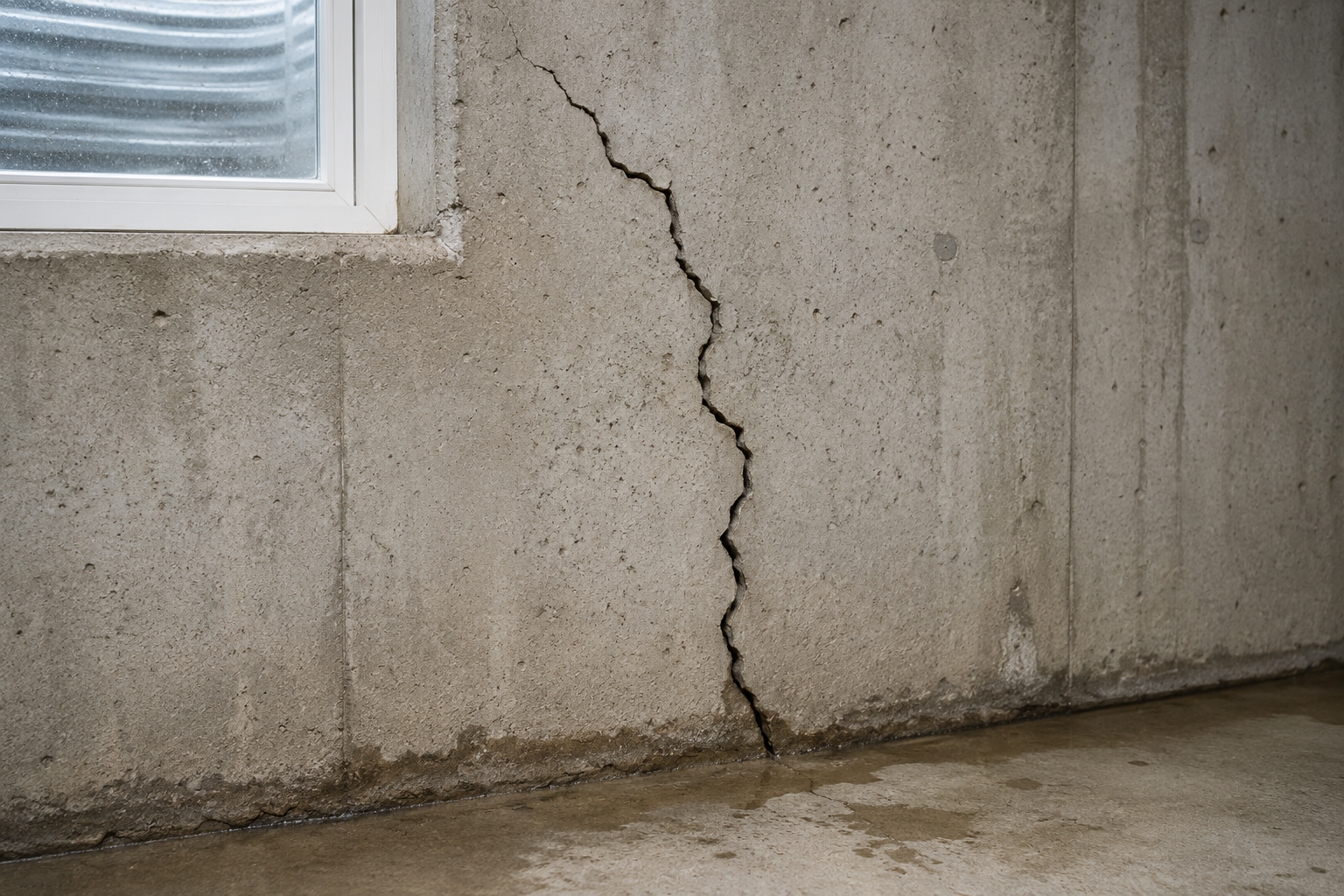
Basement Efflorescence: Six Clues to Compare
1. A powdery or crystalline deposit on masonry
Efflorescence is generally associated with mineral salts carried by water through masonry. Record color, texture, extent, and whether the deposit is loose on the surface or accompanied by flaking material. Do not identify an unknown substance by touch, taste, or an aggressive cleaning test.
2. A pattern that returns after cleaning or wet weather
A one-time light deposit may differ from a heavy pattern that returns after rain, snowmelt, or several damp days. Date photographs before cleaning and after the next weather event. Repeated basement efflorescence suggests that the moisture path deserves investigation even when no liquid water is visible.
3. Concentration below an exterior water source
Compare the indoor location with gutters, short downspouts, settled grade, window wells, hose bibs, paved surfaces, roof valleys, and the sump discharge outside. A concentrated exterior source can wet one section of wall while the rest remains dry. The location improves the questions; it does not prove the path through concealed construction.
4. Condensation on a cool surface instead of a focused leak
Warm humid air can condense on cool basement walls, pipes, and floors. Condensation may be broad or seasonal rather than tied to one crack. Record indoor humidity, surface location, weather, HVAC operation, and whether droplets appear on non-masonry surfaces too. A dehumidifier may manage air moisture but will not stop water entering through a wall or slab.
5. Material that may be mold, dust, paint failure, or another residue
White growth is not automatically efflorescence, and efflorescence is not mold. Porous finishes, drywall, wood, carpet, and stored contents can support biological growth when damp. Avoid disturbing a large or unknown deposit. If health concerns, widespread growth, sewage, or hidden wet materials are involved, use appropriately qualified help.
6. Spalling, crumbling joints, rust, or a changing crack nearby
Loss of surface material, soft mortar, corrosion, displacement, or a widening crack raises different questions than a cosmetic deposit. Photograph the larger wall condition and avoid sealing, coating, or cleaning over evidence before it is evaluated. Moisture control and material repair may need to be planned together.
What Primary Sources Say About the Moisture Clue
An NIH technical bulletin on efflorescence explains that water moving within masonry transports soluble salts to the surface. It also notes that persistent or excessive deposits can signal internal moisture, rising damp, or another water problem that should be investigated.
The EPA moisture-control guidance organizes building moisture around water sources, movement, drainage, foundations, plumbing, HVAC, and verification. The Department of Energy’s Building America renovation guidance lists white chalky stains among basement moisture signs and cautions against covering a basement problem with insulation or finishes before moisture is controlled.
A Three-Path Moisture Check
| Possible path | Clues to record | Questions to ask |
|---|---|---|
| Exterior liquid water | Rain timing, first wet point, grade, downspouts, window wells | Where is water concentrated and where can it drain? |
| Ground or masonry moisture | Floor-wall pattern, delayed timing, salts, sump behavior | How is water collected, relieved, or blocked? |
| Indoor condensation | Humidity, cool surfaces, season, HVAC, broad droplets | Is the source indoor moisture, exterior water, or both? |
Cleaning Without Hiding the Cause
Document basement efflorescence before removal. The NIH bulletin recommends gentle methods appropriate to the masonry and warns against abrasive approaches such as sandblasting or wire brushing, which can damage surfaces. Acids, strong chemicals, coatings, and sealers introduce material and safety risks; do not improvise a treatment from an internet recipe.
If a small, known deposit is cleaned, keep the before-and-after dates and monitor the same location through the next wet period. A returning pattern can be more informative than the clean wall. Correcting a gutter, grade, drain, plumbing, humidity, or wall pathway is different from removing the visible salt.
Rochester Basement Moisture Questions
In the Rochester area, compare basement efflorescence with summer humidity, hard rain, prolonged wet periods, snowmelt, freeze-thaw exposure, and the property’s drainage route. The suburb provides context, but the house provides the evidence. Use the exterior water-management guide to trace roof and yard water and the local basement-water guide to document timing and first wet point.
For recurring wall or floor seepage, review basement waterproofing in Rochester. If a crack is widening, displaced, horizontal, or part of a curved wall, use the bowed basement wall signs checklist and arrange an appropriate evaluation.
Request a Rochester basement-contractor match.
Service disclosure: Rochester Basement Repair is an information and contractor-referral service. It does not test materials, inspect properties, remediate mold, diagnose moisture, perform repairs, or guarantee a match. Contractors are independent businesses; verify qualifications, insurance, scope, safety procedures, and contract terms.