Rochester basement leaks often appear after a rainstorm or spring thaw, but the water you see indoors is usually only the final step in a problem that began outside. Roof runoff, clogged gutters, poor grading, saturated soil, and hydrostatic pressure can all push water toward a foundation wall. Treating the stain or crack from the inside without addressing the water around the foundation may provide temporary relief, but the same leak can return.
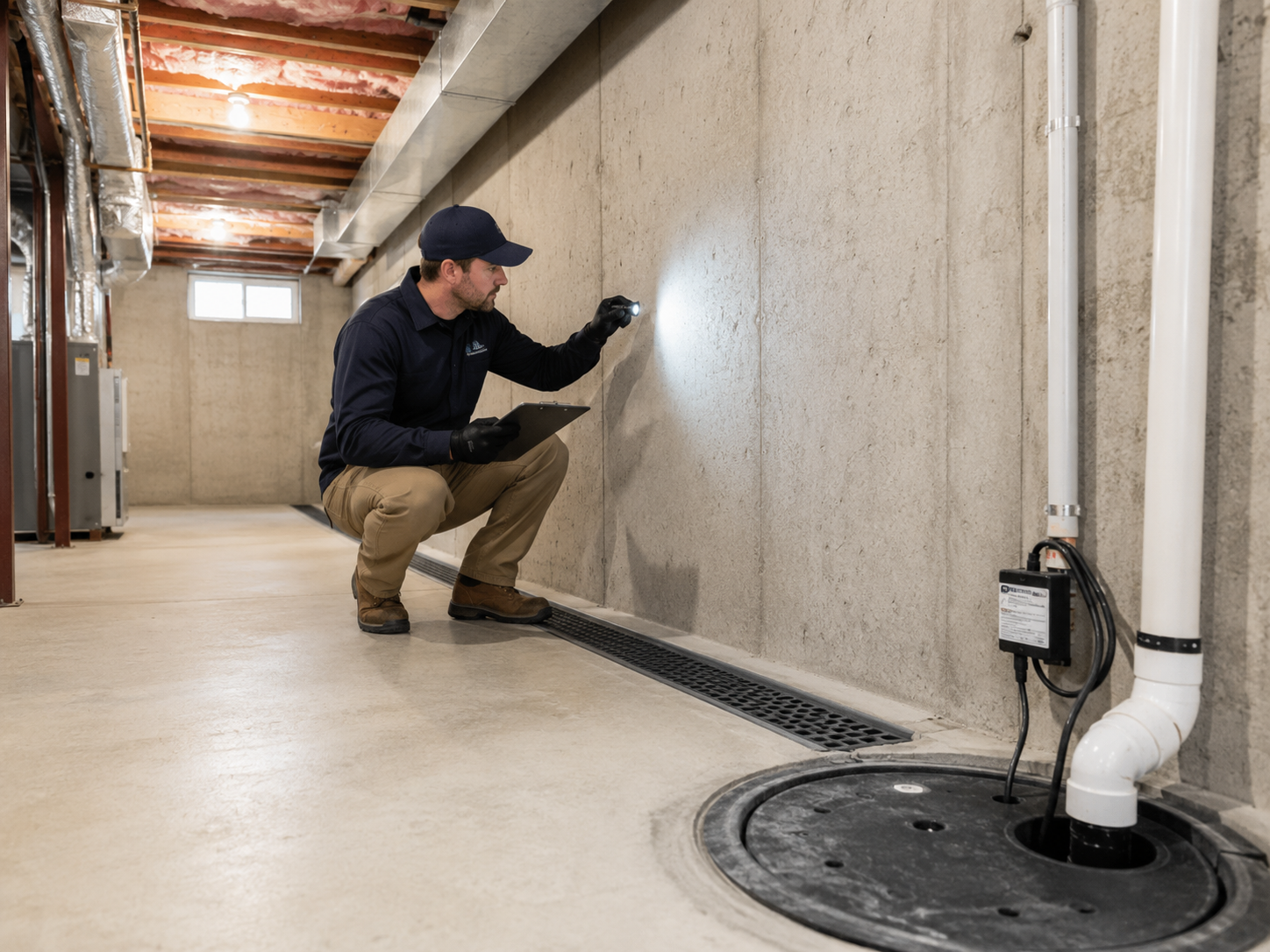
This guide explains why exterior water management matters for Rochester basement leaks, what homeowners can check safely, and when professional basement waterproofing or foundation crack repair is the better next step.
Why Water Outside the Foundation Causes Rochester Basement Leaks
Soil next to a foundation becomes a reservoir during heavy rain and snowmelt. As that soil saturates, water pressure increases against the foundation wall and footing. Water then looks for the easiest path inside: a construction joint, a masonry crack, a pipe penetration, a window well, or the joint where the wall meets the floor.
Rochester homes can be especially vulnerable when freeze-thaw cycles open small cracks, downspouts discharge beside the house, or clay-heavy soils drain slowly. A basement may stay dry during ordinary weather and still leak when a short, intense storm overwhelms the site drainage.
Exterior water management is the first line of defense
The most useful first checks are simple:
- Gutters and downspouts: Clean gutters and extend downspouts well away from the foundation so roof water is not released beside the wall.
- Grading: The ground should generally fall away from the house. Depressions next to the foundation can collect water even when the rest of the yard looks level.
- Window wells: Clear leaves and sediment, confirm that drains are open, and use properly fitted covers where appropriate.
- Hard surfaces: Check patios, walkways, and driveways for settled areas that direct runoff toward the house.
- Drainage systems: If water continues to collect, a professional may recommend exterior drainage, an interior perimeter system, a sump pump, or a combination of solutions.
These steps do not replace a diagnosis. They help reduce the amount of water reaching the foundation while you determine whether the problem is surface runoff, groundwater, a plumbing issue, or a structural opening.
What research says about controlling water around basements
A 2024 study in Structures examined how controlling water movement outside a basement can reduce leakage during intense rainfall. The researchers tested waterproof interception and pressure-relief drainage in a laboratory model. Their results showed that a waterproof barrier could delay rainwater infiltration, while combining interception with controlled drainage reduced the rise of water beneath the basement more effectively than a barrier alone.
The study is an engineering model rather than a Rochester residential case study, so its exact design ratios should not be applied directly to a home. The practical takeaway is still important: reducing the amount of water that reaches the foundation and relieving pressure around the structure can address the cause of leakage, not just the symptom.
Read the full study on ScienceDirect.
Exterior waterproofing versus an interior repair
Exterior waterproofing can be appropriate when the outside face of the foundation is accessible and the leak is being driven by soil-side water pressure. The work may include excavation, cleaning and repairing the wall, applying a waterproofing membrane, improving drainage, and carefully backfilling.
An interior system may be the practical choice when excavation would affect landscaping, additions, decks, utilities, or neighboring property. Interior drainage can collect water that reaches the foundation and direct it to a sump pump. A qualified contractor should explain why the recommended system fits the source of water and the construction of your home.
Our Basement Waterproofing Rochester NY service page outlines common approaches and the information a professional needs to evaluate a wet basement.
When a foundation crack needs attention
Not every crack means the foundation is failing, but location, width, movement, and water entry all matter. A horizontal crack, a crack that is widening, or a crack accompanied by bowing or displacement deserves prompt evaluation. Vertical and stair-step cracks can also leak and may reflect settlement or movement that should be documented.
Do not assume that painting over a crack solves the problem. The repair method depends on whether the crack is active, whether water pressure is present, and whether the wall is concrete, block, or masonry. Learn more about evaluation and repair options on our Foundation Crack Repair Rochester NY page.
A practical Rochester basement leak checklist
- Note when the leak occurs: heavy rain, snowmelt, or all the time.
- Photograph the interior leak and the outside area nearest that wall.
- Check gutters, downspouts, grading, window wells, and visible plumbing.
- Look for efflorescence, damp odors, peeling finishes, or new cracks.
- Keep valuables off the floor and use a dehumidifier while the cause is investigated.
- Ask a waterproofing or foundation professional for a written diagnosis before choosing a repair.
The bottom line
A dry basement usually starts with managing water before it reaches the foundation. Exterior drainage, grading, waterproofing, pressure relief, and targeted crack repair each have a role. The right solution depends on the source of water and the condition of the foundation, so a site inspection is more useful than a one-size-fits-all product.
If your Rochester basement leaks after storms, request an inspection so the water path can be identified and the repair plan can address the cause.
Study citation
Yue, J., Han, P., Zhao, L., & Wang, Z. (2024). Experimental study on controlling basement leakage for urban flooding mitigation. Structures, 68, 106751. https://doi.org/10.1016/j.istruc.2024.106751. View the article on ScienceDirect.